
American dental implants
Discover why American dental implants are widely used, what makes their systems different, and how to choose the right implant for your case.
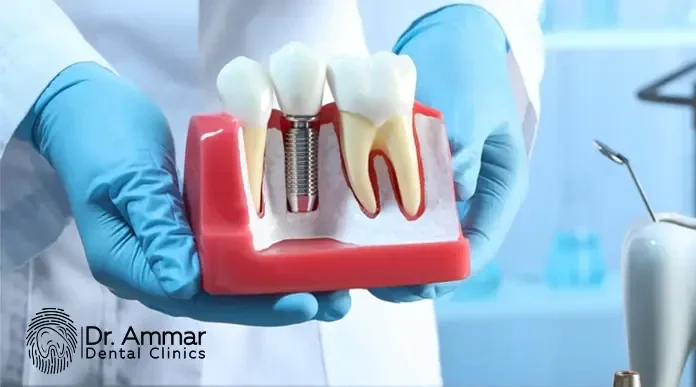
When considering tooth replacement, choosing the right dental implant system is an important step toward restoring oral function and smile aesthetics. With numerous implant systems available, American dental implants are among the options worth exploring to understand their design characteristics, clinical applications, and suitability for different patients.
In this article, we will explain what American dental implants are, their advantages, the main types of American dental implants, the cost of American dental implants in Egypt, the differences between American and German dental implants, and how to select an implant system that suits your individual clinical needs.
What Are American Dental Implants?
American dental implants are one of the options available for replacing missing teeth. A dental implant is surgically positioned within the jawbone to function as an artificial tooth root, supporting a dental crown, bridge, or other implant-supported restoration.
Dental implant systems differ in implant geometry, dimensions, surface characteristics, materials, prosthetic connections, and restorative components. Therefore, selecting an appropriate implant system depends on factors such as jawbone volume and quality, periodontal health, the number and location of missing teeth, and the patient's overall treatment requirements.
Titanium remains the most established material in implant dentistry because of its mechanical properties and biocompatibility, while zirconia implants are also available for selected clinical indications. Implant surface characteristics can also influence the biological process of osseointegration, in which bone forms direct contact with the implant surface.
At Dr. Ammar Clinics for Dental Care, Cosmetic Dentistry, and Implant Dentistry, we carefully evaluate oral and jawbone conditions and provide individualized consultations regarding American dental implants and other available implant systems. Contact us to schedule your consultation and take the first step toward restoring your smile.
Advantages of American Dental Implants
American implant manufacturers offer a wide range of implant designs, restorative connections, surface technologies, and prosthetic components. These variations enable implant dentists to select systems according to the anatomical and restorative requirements of each patient.
Some potential advantages of American dental implant systems include:
Precision manufacturing: Implant systems are produced with standardized dimensions and carefully engineered components intended to provide accurate surgical and prosthetic integration.
Biocompatible materials: Many implant systems are manufactured from titanium or titanium alloys, while zirconia is also used in certain implant systems.
Support for osseointegration: Surface modifications are used by many implant manufacturers to optimize interactions between bone and the implant surface. Current evidence suggests that implant surface characteristics may influence early osseointegration and implant stability.
Wide range of implant designs: Different diameters, lengths, implant geometries, and prosthetic connections allow clinicians to select an implant according to available bone and restorative requirements.
Preservation of alveolar bone function: Dental implants transmit functional loading to the surrounding alveolar bone and can help limit the bone remodeling associated with tooth loss.
Multiple restorative options: Implant systems can be used for single-tooth replacement, multiple missing teeth, and various full-arch implant-supported restorations.
Restoration of oral function and aesthetics: Implant-supported crowns and bridges are designed to restore chewing function, speech, and the appearance of missing teeth.
These characteristics vary considerably between manufacturers and individual implant systems. For this reason, accurate diagnosis, treatment planning, and the clinician's experience remain critical when deciding whether an American implant system is appropriate for a particular case.
Types of American Dental Implants
There are several American dental implant brands and systems, with differences in implant geometry, implant-abutment connection, surface technology, dimensions, and prosthetic components.
Some of the most recognized American dental implant systems include:
BioHorizons Dental Implants
BioHorizons develops a variety of implant and restorative systems. One of its best-known technologies is Laser-Lok®, which consists of precision-engineered laser microchannels on portions of the implant or abutment surface.
BioHorizons states that Laser-Lok microchannels are designed to support soft-tissue attachment and help stabilize peri-implant bone and gingival tissues. The company also provides research references examining the biological response of soft tissue and bone to this surface technology.
BioHorizons also offers guided surgical solutions and Tapered Internal implant configurations in several implant diameters and prosthetic platform sizes.
Zimmer Biomet / ZimVie Dental Implants
The dental implant business historically associated with Zimmer Biomet Dental is currently marketed through ZimVie Dental.
One of its established implant systems is the Tapered Screw-Vent® (TSV®) implant. The system features a tapered titanium-alloy implant body designed to support primary stability and is available with different coronal configurations and surface options.
The TSV system also incorporates an internal hex prosthetic connection and the MTX® microtextured surface. Different configurations are available to address varying surgical and restorative requirements.
Implant Direct Dental Implants
Implant Direct offers several dental implant systems, including Legacy™ and Simply Iconic™.
The company introduced Simply Iconic as a conical hex implant system designed to provide primary stability while simplifying restorative workflows.
Its implant portfolio provides different implant dimensions and restorative components, allowing clinicians to choose implant and prosthetic configurations according to the clinical and restorative requirements of each case.
Bicon Dental Implants
Bicon has a distinctive implant design that differs from many conventional threaded implant systems.
The Bicon system uses a 1.5° locking taper implant-abutment connection, rather than a conventional screw-retained abutment connection. The company also offers implants with a plateau or fin-shaped design and a range of relatively short implant lengths.
The Bicon SHORT® Implant range includes implants as short as 5 and 6 mm in selected diameters. According to Bicon, these shorter implants can provide additional treatment options in situations where anatomical limitations make longer implants difficult to place.
However, whether a short implant is suitable for an individual patient must be determined through clinical examination, radiographic assessment, bone evaluation, and appropriate prosthetic planning.
Keystone Dental Implants
Keystone Dental Group offers several implant systems, including Genesis, Genesis Active, PrimaConnex, and other implant platforms.
Its current portfolio includes systems with different prosthetic connection designs, including conical connections, internal hex connections, and TiLobe connections.
The availability of different implant platforms and restorative connections allows the clinician to select an implant according to the available bone, implant site, prosthetic restoration, and overall treatment plan.
With numerous American dental implant systems available, implant selection should not be based on brand name alone. The condition and dimensions of the jawbone, periodontal health, implant location, prosthetic requirements, occlusal forces, and the clinician's experience should all be considered during treatment planning.
At Dr. Ammar Clinics, dental implant treatment begins with a detailed clinical assessment to determine which implant options may be appropriate for your condition. Contact us today to schedule your consultation.
Cost of American Dental Implants in Egypt
The cost of American dental implants in Egypt may reach approximately EGP 20,000 per implant, according to the clinic's current pricing information.
The final cost may vary depending on the implant system selected, jawbone condition, restorative components, and whether additional procedures are required before implant placement.
Factors that may affect the cost of American dental implant treatment include:
The manufacturer and implant system selected.
The number of missing teeth requiring replacement.
Jawbone quantity and quality.
Whether bone grafting or other preparatory procedures are required.
The type of final crown or prosthetic restoration.
Diagnostic imaging and treatment planning.
The complexity of the surgical and restorative treatment.
The treating dentist's experience and follow-up protocol.
For an accurate estimate of the cost of American dental implants, schedule a consultation at Dr. Ammar Clinics for a detailed clinical assessment and individualized treatment plan.
American vs. German Dental Implants
The difference between American and German dental implants is not simply a matter of country of origin.
Both American and German manufacturers produce multiple implant systems with different implant geometries, surface technologies, prosthetic connections, restorative components, and clinical indications.
For this reason, it is more clinically accurate to compare individual implant systems rather than assume that implants from one country are inherently better than those from another.
Comparison | American Dental Implants | German Dental Implants |
|---|---|---|
Examples of manufacturers | BioHorizons, Implant Direct, Bicon, ZimVie/legacy Zimmer systems, Keystone Dental | BEGO, CAMLOG, bredent, Dentaurum, medentis/ICX |
Implant designs | Multiple tapered, conical, internal-connection, short-implant, and other configurations | Multiple implant geometries and prosthetic connection designs |
Surface technologies | May include technologies such as BioHorizons Laser-Lok and ZimVie MTX surfaces | Different manufacturers use their own implant surface technologies |
Prosthetic connections | Conical, internal hex, locking taper, and other connection concepts are available | Conical, internal, and manufacturer-specific prosthetic connections are available |
Clinical selection | Depends on bone anatomy, implant location, prosthetic requirements, and treatment plan | Depends on bone anatomy, implant location, prosthetic requirements, and treatment plan |
Cost | Varies by manufacturer, implant system, restorative components, and clinic | Varies by manufacturer, implant system, restorative components, and clinic |
For example, BioHorizons documents its Laser-Lok surface technology, while ZimVie describes the MTX surface and Tapered Screw-Vent implant system. These are system-specific features rather than general characteristics of every American implant.
Likewise, Bicon uses its distinctive locking taper connection, demonstrating why implant systems should be compared individually rather than solely by country of manufacture.
Therefore, choosing between American and German dental implants should be based on the implant system's specifications and its suitability for the patient's jawbone, periodontal condition, restorative requirements, and treatment plan.
At Dr. Ammar Clinics, we assess your condition carefully and explain the available dental implant options so that you can make an informed treatment decision with confidence.
How to Choose the Right Dental Implant for Your Case
Choosing a dental implant should not be based solely on the country of manufacture or the implant brand.
A comprehensive evaluation of the teeth, gums, and jawbone is required before implant placement. Dental imaging also plays an important role in diagnosis and implant treatment planning.
Current ADA and American Academy of Oral and Maxillofacial Radiology recommendations emphasize selecting dental imaging according to the individual patient's clinical needs after a thorough examination. CBCT may provide three-dimensional information when it is clinically indicated for diagnosis and treatment planning.
When considering an American dental implant, important factors include:
Undergoing a comprehensive examination of the teeth, gums, and jawbone.
Evaluating the manufacturer and specifications of the implant system.
Selecting an implant diameter, length, and design appropriate for the available bone.
Considering the number and location of missing teeth.
Determining the type of final prosthetic restoration.
Assessing whether bone grafting or other preparatory procedures may be necessary.
Discussing treatment stages, follow-up, and total treatment costs.
Choosing a dentist experienced in implant surgery and prosthetic rehabilitation.
At Dr. Ammar Clinics, we carefully evaluate jawbone and periodontal conditions and explain the available implant systems to help determine an option that matches your individual treatment requirements.
Book your consultation today and begin your journey toward restoring your smile and oral function.
Why Choose Dr. Ammar Clinics for American Dental Implants?
Restoring your smile requires more than simply selecting an implant brand. Appropriate diagnosis, surgical planning, prosthetic planning, and clinical follow-up all contribute to the overall treatment process.
At Dr. Ammar Clinics for Dental Care, Cosmetic Dentistry, and Implant Dentistry, we aim to combine clinical experience, modern diagnostic technologies, and individualized treatment planning throughout the different stages of dental implant treatment.
Reasons patients may choose Dr. Ammar Clinics for American dental implant treatment include:
More than 10 years of experience in dental implant treatment.
Modern technologies for diagnosis and implant treatment planning.
A dental team experienced in implant dentistry and restorative treatment.
Detailed evaluation of the jawbone and periodontal tissues before treatment.
Individualized selection of the implant system according to each patient's needs.
Continuous clinical follow-up throughout treatment and recovery.
Coordination of treatment visits for international patients, particularly patients traveling from Saudi Arabia.
Ultimately, the success of American dental implant treatment depends not only on the implant system itself but also on accurate case selection, bone and soft-tissue conditions, surgical execution, prosthetic planning, and appropriate follow-up.
At Dr. Ammar Clinics for Dental Care, Cosmetic Dentistry, and Implant Dentistry, we begin by evaluating your individual condition and discussing whether an American implant system is suitable for your treatment needs.
Contact us today to schedule your consultation and take the first step toward restoring your smile with confidence.