
Dental root implantation
Discover the benefits of dental implants for replacing missing teeth with a stable, natural-looking solution. Learn about the implantation process and the latest techniques to restore your smile with confidence.
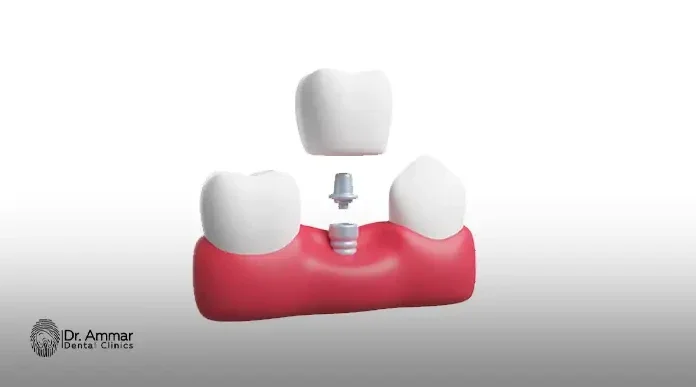
Losing a tooth not only affects the appearance of your smile but can also alter your chewing and speech, making daily details more difficult—especially when sufficient support is lacking to replace the missing teeth. Dental root implants serve as a solution that helps restore dental function and appearance.
In this article, we will explore what dental root implants mean, when they are necessary, their importance, the procedural stages, recovery time, the importance of choosing a specialized center for effective results, and finally, the role of Dr. Ammar Clinics in providing high-quality, competitively priced dental root implants. Read on to discover all the details.
What Does Dental Root Implantation Mean?
Dental root implantation is a medical procedure aimed at replacing missing natural roots using small metal fixtures secured inside the jawbone. These act as a strong foundation supporting artificial teeth that replace missing ones, helping restore the smile’s appearance and oral function.
This technique provides a stable base for prosthetic teeth as the implants gradually integrate with the jawbone to provide necessary support, performing functions closely resembling natural teeth.
At Dr. Ammar Clinics for Dentistry, Cosmetics, and Implants, we are committed to providing specialized care starting with a comprehensive oral and dental evaluation to determine the most appropriate treatment options for each case. Contact us to book your consultation and learn the details of dental root implants and the steps to restore your smile with confidence.
What is the Purpose of Dental Root Implants?
Dental root implants aim to replace missing roots and provide a stable foundation supporting replacement teeth, helping restore oral functions and improve overall smile aesthetics. The dentist determines the suitability of the procedure after evaluating oral and jawbone conditions. The most common cases requiring dental root implants include:
Loss of one or more teeth due to severe decay or trauma.
Complete tooth loss in one or both jaws.
Severe root damage preventing preservation through endodontic treatment.
Incompatibility or poor stability of removable dentures during chewing and speaking.
The need to replace missing teeth while preserving adjacent healthy teeth.
Tooth loss caused by advanced periodontal disease leading to loosening and falling out.
The need to anchor a dental bridge on implants rather than relying on adjacent natural teeth.
In these cases, dental root implants can be a suitable option to replace missing teeth, though professional clinical evaluation remains essential to confirm procedure suitability and outline treatment steps tailored to the patient's jaw condition and needs.
The Importance of Dental Root Implants
The importance of dental root implants extends far beyond simply replacing missing teeth; they help restore oral functions, maintain jawbone health, and enhance smile aesthetics. Key benefits include:
Restoring Chewing Efficiency: Helps consuming food more comfortably compared to non-fixed replacement options.
Improving Speech: Enhances speech clarity when compromised by tooth loss.
Preserving Jawbone: Implants stimulate bone and minimize resorption associated with missing teeth.
Supporting Replacement Teeth: Provides a stable base helping stabilize crowns or implant-supported restorations.
Enhancing Smile Aesthetics: Replaces missing teeth and restores dental harmony with facial features.
Protecting Adjacent Teeth: Allows replacing missing teeth without needing to file down adjacent teeth, as required in traditional bridges.
Because realizing these benefits depends on oral and jawbone conditions alongside choosing suitable implant types, relying on Dr. Ammar Clinics grants you specialized medical expertise in dental root implants, accurate clinical evaluation, clear treatment plans, and continuous follow-up throughout all recovery stages.
Stages of Dental Root Implants
Dental root implantation relies on a set of stages designed to secure fixtures within the jawbone and prepare them to support replacement teeth, including:
Examination and Planning: The dentist examines teeth and gums, requesting necessary scans to evaluate jawbone density, determine implant placement, and map out the treatment plan.
Jawbone Preparation (When Needed): If insufficient bone volume exists to secure implants, the dentist may recommend bone grafting prior to or concurrently with implantation.
Fixture Placement: Performed under appropriate local anesthesia, the dentist anchors the fixtures into the jawbone to function as artificial roots supporting replacement teeth.
Osseointegration Stage: The jaw requires a healing and osseointegration period—typically ranging from 3 to 6 months—during which implants gradually integrate with the bone to provide necessary stability.
Final Restoration Placement: After confirming implant integration and stability, the dentist attaches appropriate crowns or restorations to restore dental function and aesthetics.
Follow-Up and Care: The dentist schedules follow-up visits to monitor implant stability, ensuring strict adherence to oral hygiene and recommended care instructions to maintain results.
Each stage demands precision in diagnosis, execution, and monitoring, as success directly impacts fixture stability and proper healing, making the choice of an expert dental implant specialist in Egypt and compliance with instructions vital for successful outcomes.
Recovery Time from Dental Root Implants
Recovery timelines vary based on patient health, fixture count, and bone grafting requirements. Gums typically require 1 to 2 weeks for initial healing, while bone integration takes approximately 3 to 6 months, varying by case.
During the first few days following dental root placement, minor swelling or discomfort may occur in the surgical site, gradually subsiding with proper adherence to post-operative instructions:
Taking prescribed medications according to specified dosages and schedules.
Relying on soft foods and avoiding hard items or foods that irritate the surgical area.
Applying cold compresses as directed to minimize swelling.
Avoiding smoking to reduce potential negative impacts on tissue and bone healing.
Maintaining oral hygiene and attending scheduled follow-up appointments.
Following these guidelines supports implant healing and minimizes complication risks, though patients must consult their dentist if pain or swelling increases for early evaluation and care.
Also read: [How Long Does Dental Implant Pain Last?]
Are Dental Root Implants Painful?
No, dental root implants are not considered painful, as they are typically performed under local anesthesia. Patients may only feel mild pressure or discomfort during fixture placement. Once anesthesia wears off, mild to moderate pain or swelling may appear, especially during the first few days, before gradually improving.
The Importance of Choosing a Specialized Dental Implant Center
The journey toward successful dental root implants begins with accurate diagnosis and selecting a center equipped with the expertise and technology required for diverse cases. Well-planned treatment steps ensure the ideal option is chosen to replace missing teeth and achieve optimal outcomes tailored to the patient. Key advantages of relying on a specialized center include:
Medical Expertise: Access to clinicians experienced in dental implantology and complex case management.
Advanced Technologies: Utilizing diagnostic and imaging equipment ensuring precise diagnosis and planning.
Jawbone and Gum Evaluation: Determining oral readiness for implants and identifying supplementary requirements.
Selecting Appropriate Implants: Choosing fixture types matching clinical needs and therapeutic requirements.
Customized Treatment Plans: Outlining clear steps and discussing expected outcomes with the patient.
Sterilization Standards: Adhering to infection control protocols to safeguard patient safety.
Post-Implant Monitoring: Tracking implant integration and managing any recovery issues promptly.
Care Instructions: Providing clear guidelines to maintain long-term gum and implant health.
At Dr. Ammar Clinics for Dentistry, Cosmetics, and Implants, we ensure your journey to restoring your smile begins with a precise examination and tailored planning, utilizing digital imaging tools and recognized implant brands. Book your consultation today and discover available options to replace missing teeth through a structured plan addressing your needs and restoring oral function and smile aesthetics with confidence.
Why Choose Dr. Ammar Clinics for Dental Root Implants?
At Dr. Ammar Clinics, we believe successful dental root implants rely on understanding individual case needs and designing a carefully studied treatment plan. We combine medical expertise, modern technology, and continuous follow-up throughout all treatment phases, emphasizing clear communication of expected steps to boost patient confidence and reassurance.
Key advantages making Dr. Ammar Clinics the ideal choice for dental root implants include:
Over 10 Years of Experience in dental root implantology.
Reliance on Modern Technologies for diagnosis and treatment.
Specialized Medical Team experienced in implant procedures and diverse cases.
Customized Treatment Plans tailored to jaw conditions and patient needs.
Continuous Monitoring of recovery stages and implant integration.
Multiple Branches Available to facilitate easy access to clinic services.
Ultimately, dental root implants represent a crucial step toward restoring dental function and smile aesthetics, but achieving favorable outcomes begins with precise diagnosis, selecting a treatment plan matching jaw health, and following clinical instructions during recovery.
At Dr. Ammar Clinics, we ensure your journey begins with a clear understanding of your needs and available treatment options, accompanied by ongoing support at every stage. Contact us and book your consultation today, taking the first step toward a smile that restores your comfort and self-confidence.