
How dental bone grafting is performed
Learn about dental bone grafting, the steps involved in replacing lost jawbone, the cases for which it is suitable, the recovery period, and essential instructions to follow before and after the procedure.
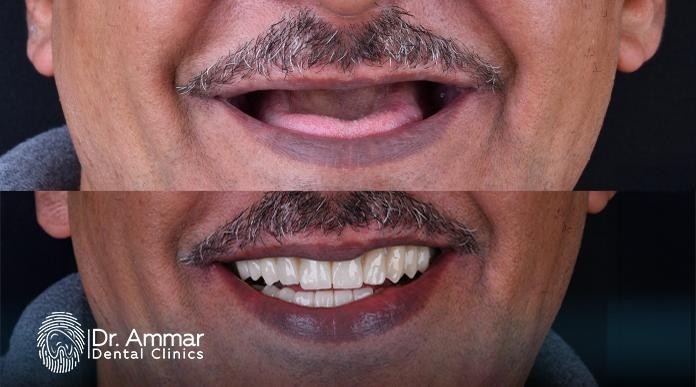
Has your dentist informed you that your jawbone volume is insufficient for dental implants? While this may initially seem like a barrier to restoring your smile, it does not mean you have to give up on implants altogether. Dental bone grafting can rebuild missing bone and prepare your jaw to support implant fixtures securely. Understanding how dental bone grafting works is an essential step in learning how to restore your eligibility for implants based on your jaw structure and clinical needs.
In this article, we explain the bone grafting procedure, the causes and signs of jawbone loss, when grafting becomes necessary, its cost in Egypt, its importance for implant success, and the advantages of choosing Dr. Ammar Dental Clinics for this treatment. Read on to learn more.
What Is Dental Bone Grafting?
Dental bone grafting aims to replace missing bone volume and increase jawbone height and width to support dental implants, particularly when natural bone density is inadequate to anchor a fixture.
The procedure begins with a detailed clinical examination and 3D imaging (CBCT) to evaluate bone dimensions, identify areas of deficiency, and select the appropriate bone graft material.
During the procedure, the dentist places the grafting material into the deficient site. The material may be harvested from the patient's own body (autograft) or derived from sterile, biocompatible synthetic or processed donor sources. Over the following months, the graft fuses with the surrounding natural bone through a process called osteointegration. The dentist then evaluates bone stability to schedule the subsequent implant placement.
Predictable outcomes depend on accurate pre-surgical planning, precise technique, and patient compliance with post-operative instructions. At Dr. Ammar Dental Clinics, we thoroughly evaluate jawbone density using advanced digital imaging and design personalized treatment plans to monitor healing and verify jaw readiness for implant surgery.
Causes of Jawbone Loss
Understanding the causes of jawbone loss helps clinicians evaluate bone structure and determine whether grafting is necessary prior to implant placement. Common factors contributing to jawbone resorption include:
Long-standing tooth loss without timely replacement.
Tooth extractions without immediate bone preservation.
Facial or dental trauma.
Chronic periodontal disease, abscesses, and deep oral infections.
Vitamin D deficiency affecting bone mineral density.
Systemic conditions such as uncontrolled diabetes, osteoporosis, or rheumatoid arthritis.
Prolonged use of conventional removable dentures.
Chronic smoking and tobacco use.
Early detection of jawbone loss helps halt further deterioration and allows for timely bone augmentation to support future dental implants.
Signs That May Indicate Jawbone Deficiency
Jawbone loss often develops gradually without pain or obvious symptoms, typically being discovered during an evaluation for missing tooth replacement. However, certain clinical signs may prompt a dentist to evaluate bone health:
Noticeable tooth mobility or shifting.
Advanced gum recession exposing tooth roots.
Recurrent periodontal inflammation and swelling.
Delayed soft tissue healing following extractions.
Visible bone exposure within the oral cavity.
Persistent drainage or discharge from an extraction or infected site.
Unexplained numbness or altered sensation in the jaw or lip.
Unexplained oral lesions or mucosal changes.
These signs do not always indicate bone loss, as they can stem from other conditions requiring medical attention. A clinical exam supported by 3D CBCT scans is essential to accurately measure remaining bone volume and plan appropriate grafting procedures.
Diagnostic Evaluation of Jawbone Loss
Precise diagnosis is the foundation for determining bone grafting needs and designing an effective treatment plan. Clinicians rely on comprehensive evaluations rather than symptoms alone:
Medical and Dental History Review: Assessing systemic health and the underlying cause of tooth loss.
Clinical Oral Examination: Checking for caries, active infections, and periodontal status.
Spatial Analysis: Measuring available space and inter-arch relationships for future implant crowns.
2D Panoramic Radiographs: Screen overall jaw structures and adjacent teeth.
3D CBCT Scans: Precisely measuring bone height, width, density, and proximity to vital structures (e.g., nerves, sinus cavities).
Occlusal and Bite Analysis: Evaluating force distribution during chewing.
Systemic Health Screening: Ordering laboratory tests if medical conditions impact bone healing.
At Dr. Ammar Dental Clinics, these diagnostic protocols ensure exact measurements of bone deficiency, allowing us to select the optimal grafting technique for each case.
The Dental Bone Grafting Procedure
The bone grafting workflow follows structured clinical steps designed to prepare the jaw site safely and comfortably:
Diagnostic Radiography: Utilizing 3D CBCT scans to map the exact dimensions of bone deficiency.
Graft Selection: Choosing the appropriate grafting material (autogenous, allograft, xenograft, or synthetic).
Anesthesia: Administering local anesthesia or conscious sedation to ensure a completely pain-free procedure.
Site Preparation: Creating a small surgical entry in the gum tissue and sterilizing the bone bed.
Graft Placement: Securing the grafting material and placing protective barrier membranes if necessary.
Healing Phase: Allowing 3 to 6 months for new bone growth and fusion with the jaw.
Re-Evaluation: Assessing bone density via follow-up scans to confirm readiness for implant placement.
- Book your appointment Reach us whichever way suits you best.
Importance of Dental Bone Grafting
Bone grafting plays a vital role in restoring lost jaw architecture and ensuring long-term implant success:
Provides structural bone support to anchor dental implants permanently.
Rebuilds deficient alveolar ridges following tooth extraction or trauma.
Restores facial contours and prevents soft tissue collapse caused by bone resorption.
Protects adjacent natural teeth and surrounding periodontal structures.
Significantly increases long-term implant success rates in compromised jaws.
Is Dental Bone Grafting Painful?
No. The procedure is performed under effective local anesthesia, ensuring you do not feel pain during the surgery. After the anesthetic wears off, mild swelling or discomfort may occur, which can be easily managed with prescribed analgesics and following post-operative care instructions.
At Dr. Ammar Dental Clinics, we walk you through every step of the procedure beforehand and provide dedicated post-surgical follow-up to ensure a smooth, comfortable recovery.
Cost of Dental Bone Grafting in Egypt
The cost of dental bone grafting in Egypt typically ranges from 3,000 EGP to 5,000 EGP per site. Final pricing varies based on individual clinical requirements and several key factors:
Volume and extent of missing bone.
Type and origin of the grafting material used.
Periodontal and soft tissue condition.
Required diagnostic imaging (e.g., 3D CBCT scans).
Surgical expertise and clinic technology.
Schedule a consultation at Dr. Ammar Dental Clinics to receive a precise evaluation of your jawbone health and a clear breakdown of treatment costs.
Why Choose Dr. Ammar Dental Clinics for Bone Grafting?
Successful bone grafting requires accurate diagnosis, advanced surgical skill, and meticulous follow-up care. At Dr. Ammar Dental Clinics, we offer:
Comprehensive Diagnostic Evaluation: Precision 3D CBCT analysis of teeth, gums, and bone structure.
Transparent Treatment Plans: Clear explanation of every surgical phase before treatment begins.
Tailored Grafting Techniques: Custom selection of grafting materials suited to your specific anatomy.
Continuous Recovery Monitoring: Regular checkups to verify bone fusion and evaluate implant readiness.
Post-Operative Care Guidance: Detailed home-care instructions to promote fast healing and minimize complications.
Jawbone deficiency does not mean you cannot have a complete, confident smile. Advanced bone grafting techniques make it possible to rebuild lost bone and successfully receive dental implants.
If bone loss has delayed your dental implant plans, book your consultation at Dr. Ammar Dental Clinics today and take the first step toward restoring your teeth and smile confidence.