
Korean dental implants
Discover Korean dental implants, their most common systems and advantages, and how to choose the right implant for your jawbone and treatment needs.
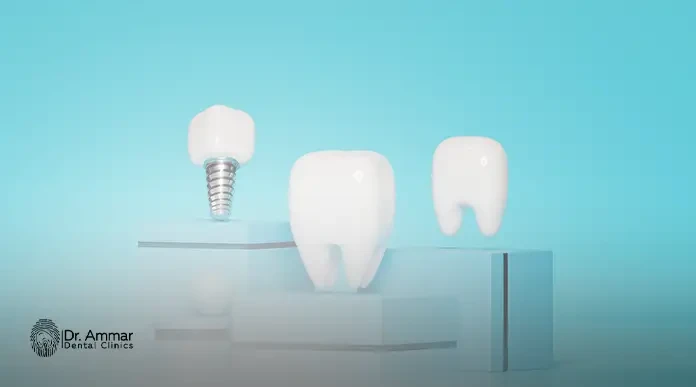
When you lose a tooth, you are not simply looking for a way to replace it; you want a treatment that can help restore your ability to chew comfortably and regain confidence in your smile. With numerous dental implant systems available, Korean dental implants are among the options worth exploring before deciding on treatment.
In this article, we will explain what Korean dental implants are, their main advantages, the most common types of Korean dental implants, what Korean dental implants look like, the differences between Korean and German dental implant systems, and the factors that determine the cost of Korean dental implants in Egypt.
What Are Korean Dental Implants?
Korean dental implants are among the implant systems available for replacing missing teeth.
A dental implant fixture is placed within the jawbone to replace the root of a missing tooth. After appropriate healing and osseointegration, an abutment and prosthetic crown can be attached to restore the visible portion of the tooth.
Dental implants are available in different diameters, lengths, macro-designs, surface characteristics, and prosthetic connections. Therefore, choosing a particular Korean implant system depends on factors such as:
Available jawbone volume and quality.
Periodontal and soft-tissue health.
The location of the missing tooth.
The planned prosthetic restoration.
The patient's individual clinical requirements.
Osseointegration is one of the fundamental biological processes behind implant stability. Current evidence indicates that implant surface characteristics and implant design can influence bone-to-implant healing and early implant stability.
At Dr. Ammar Clinics for Dental Care, Cosmetic Dentistry, and Implant Dentistry, we carefully assess your teeth, gums, and jawbone before discussing the available Korean dental implant systems and determining which options may be appropriate for your treatment needs.
Contact us to schedule your consultation and begin your treatment journey with a clear and individualized plan.
Advantages of Korean Dental Implants
Korean dental implant manufacturers offer a wide variety of implant designs and restorative components, giving clinicians several options when planning tooth replacement.
The characteristics of individual implant systems vary between manufacturers, but potential advantages include:
A wide range of implant designs and dimensions for different anatomical situations.
Use of titanium in many implant systems.
Multiple restorative options for replacing missing teeth.
Surface technologies designed to support osseointegration.
Options for replacing a single tooth, multiple teeth, or supporting more extensive prosthetic restorations.
Different implant-abutment connections and prosthetic components according to the selected system.
Scientific evidence indicates that implant surface modification and macro-design can influence early osseointegration and implant stability, although no single surface or design should automatically be considered superior for every patient.
The benefits of a particular Korean implant system therefore depend on accurate case selection, implant positioning, bone quality, prosthetic planning, and the clinician's experience.
At Dr. Ammar Clinics, we evaluate these factors before recommending an implant system that corresponds with the patient's anatomical and restorative requirements.
Types of Korean Dental Implants
There are several well-known Korean dental implant brands and systems, each offering different implant designs, surface technologies, dimensions, and prosthetic components.
Some of the most recognized systems include:
Osstem Dental Implants
Osstem offers several dental implant systems, with the TS III being one of its established bone-level implant designs.
The TS III features a tapered implant body and a self-tapping, dual-thread configuration designed to support primary implant stability.
Osstem provides several surface options within the TS implant family, including SA and SOI surfaces.
The SA surface is produced using sandblasting and acid etching, while the SOI surface is designed as a hydrophilic implant surface intended to enhance early interactions between blood, cells, and the implant surface.
The TS III is available in different diameters and lengths, giving the clinician multiple options according to the available bone volume, tooth position, and treatment plan.
Dentium Dental Implants
Dentium provides several implant systems, including the SuperLine family.
SuperLine implants incorporate a tapered, double-threaded implant body designed to facilitate implant insertion.
The system also includes three apical cutting flutes, providing a self-tapping configuration intended to improve control during implant placement.
Dentium uses an SLA surface treatment, which involves sandblasting with large particles followed by acid etching.
The system also incorporates a prosthetic platform designed to simplify the selection of compatible restorative components.
MegaGen Dental Implants
One of MegaGen's best-known systems is AnyRidge®.
The system incorporates MegaGen's proprietary KnifeThread® design, which is intended to provide strong primary stability while distributing forces around the surrounding bone.
The design combines:
A tapered implant body.
Progressive thread geometry.
Different thread depths.
A relatively narrow implant core.
These features allow clinicians to select implant dimensions according to bone density and the available anatomical conditions.
MegaGen also offers surface technologies intended to support osseointegration.
The company's documentation describes AnyRidge as being designed to achieve high initial stability, including in lower-density bone situations, although the suitability of any implant for immediate or early loading must be determined clinically.
NeoBiotech Dental Implants
NeoBiotech offers the IS-III Active implant system, which is designed to provide high primary stability and support osseointegration.
The system uses an SLA-treated implant surface and an implant body design developed to enhance initial fixation.
NeoBiotech also provides protocols for early or immediate loading in selected situations.
However, immediate loading should not be considered appropriate for every implant case.
It generally requires adequate primary stability, appropriate bone conditions, suitable occlusal loading, and careful clinical assessment.
Therefore, the decision to use an immediate-loading protocol should be made by the treating implant dentist according to the individual case.
The characteristics of Osstem, Dentium, MegaGen, and NeoBiotech implants differ in terms of implant geometry, surface treatment, dimensions, and prosthetic components.
For this reason, choosing a Korean dental implant system should not be based solely on the manufacturer. Jawbone anatomy, periodontal health, prosthetic requirements, and the clinician's experience should all be considered.
What Do Korean Dental Implants Look Like?
The general appearance of a Korean dental implant is similar to many other contemporary endosseous implant systems.
The implant fixture is usually a small screw-shaped or tapered component, commonly manufactured from titanium, and is placed within the jawbone to replace the root of a missing tooth.
However, the exact design differs between implant systems.
Differences may include:
Implant diameter.
Implant length.
Body taper.
Thread depth and geometry.
Apical design.
Implant surface treatment.
Implant-abutment connection.
After implant placement and successful osseointegration, a prosthetic abutment is attached to the implant, followed by the final crown or another prosthetic restoration.
The dentist selects the implant dimensions and design according to the available jawbone, tooth position, prosthetic space, and treatment requirements.
Korean vs. German Dental Implants
Korean and German dental implant systems differ in terms of manufacturers, implant designs, surface technologies, prosthetic connections, and available restorative components.
However, it is not scientifically accurate to determine which implant is better based solely on the country of origin.
A more meaningful comparison involves evaluating the individual implant system, its design, clinical indications, available prosthetic components, supporting evidence, and compatibility with the patient's anatomy and restorative requirements.
Comparison | Korean Dental Implants | German Dental Implants |
|---|---|---|
Examples of brands | Osstem, Dentium, MegaGen, NeoBiotech | BEGO, CAMLOG, bredent, Dentaurum, ICX |
Implant stability | Several systems incorporate tapered bodies and thread designs intended to support primary stability | Different systems use their own implant geometries to support implant stability |
Surface technologies | Systems may include SLA, SA, SOI, and manufacturer-specific surface technologies | German systems also use various surface-treatment technologies |
Design options | Multiple implant diameters, lengths, connections, and thread designs are available | Multiple implant geometries and prosthetic connections are available |
Clinical use | Selection depends on bone anatomy, implant site, and treatment requirements | Selection also depends on bone anatomy and treatment requirements |
Cost | May be more affordable in some markets depending on the system and clinic | Some German systems may cost more, although prices vary considerably |
Therefore, the choice between Korean and German dental implants should be based on clinical suitability rather than country of origin alone.
At Dr. Ammar Clinics, we assess the jawbone, gums, implant site, and restorative requirements before explaining the available implant options and their expected costs.
What Is the Cost of Korean Dental Implants?
The cost of Korean dental implants in Egypt may range from approximately EGP 12,000 to EGP 15,000 or more, according to the clinic's current pricing.
The final cost varies from one patient to another according to the selected implant system, clinical condition, and any additional treatment required.
To determine the cost of a Korean dental implant for your particular case, schedule a consultation at Dr. Ammar Clinics.
We assess the implant site and jawbone condition, determine the appropriate implant and prosthetic restoration, and explain the anticipated treatment costs before treatment begins.
Factors Affecting the Cost of Korean Dental Implants in Egypt
The final cost of Korean dental implants in Egypt is not determined by the implant fixture alone.
Several clinical and restorative factors can affect the total treatment cost, including:
Number of implants required.
Implant manufacturer and system.
Jawbone condition and available bone volume.
Periodontal and oral health.
Need for bone grafting or other additional procedures.
Type of final restoration, such as zirconia, porcelain, or lithium-disilicate restorations.
Diagnostic examinations and imaging.
Follow-up requirements.
Complexity of the treatment plan.
Clinical experience of the treating dentist.
These factors affect more than treatment cost. They can also influence implant selection, treatment complexity, surgical planning, and the predictability of the final restoration.
For this reason, a comprehensive clinical assessment is essential before choosing an implant system or estimating the final treatment cost.
Why Choose Dr. Ammar Clinics for Korean Dental Implants?
At Dr. Ammar Clinics, we believe successful implant treatment begins with understanding each patient's individual clinical requirements and selecting an implant system that is compatible with the available jawbone and periodontal conditions.
Implant treatment should therefore involve more than simply choosing an implant brand.
Our approach combines clinical experience, careful treatment planning, modern diagnostic technologies, and continued follow-up throughout the different stages of treatment.
Features of dental implant treatment at Dr. Ammar Clinics include:
More than 10 years of experience in implant dentistry.
Modern diagnostic and treatment-planning technologies.
A dental team experienced in implant treatment.
Detailed assessment of the jawbone and periodontal tissues before implant selection.
Individualized treatment planning.
Continuous follow-up throughout implant treatment and healing.
Coordination of treatment visits for international patients, particularly those traveling from Saudi Arabia.
Ultimately, Korean dental implants are among the available options for replacing missing teeth.
However, successful implant treatment does not depend on the implant brand alone. Appropriate diagnosis, implant selection, bone and soft-tissue conditions, accurate surgical placement, prosthetic planning, and long-term maintenance all contribute to treatment outcomes.
At Dr. Ammar Clinics for Dental Care, Cosmetic Dentistry, and Implant Dentistry, we carefully evaluate your teeth and jawbone before explaining the available implant systems and determining which options are appropriate for your individual treatment needs.
Schedule your consultation today to explore your dental implant options and take the first step toward restoring your oral function and smile.