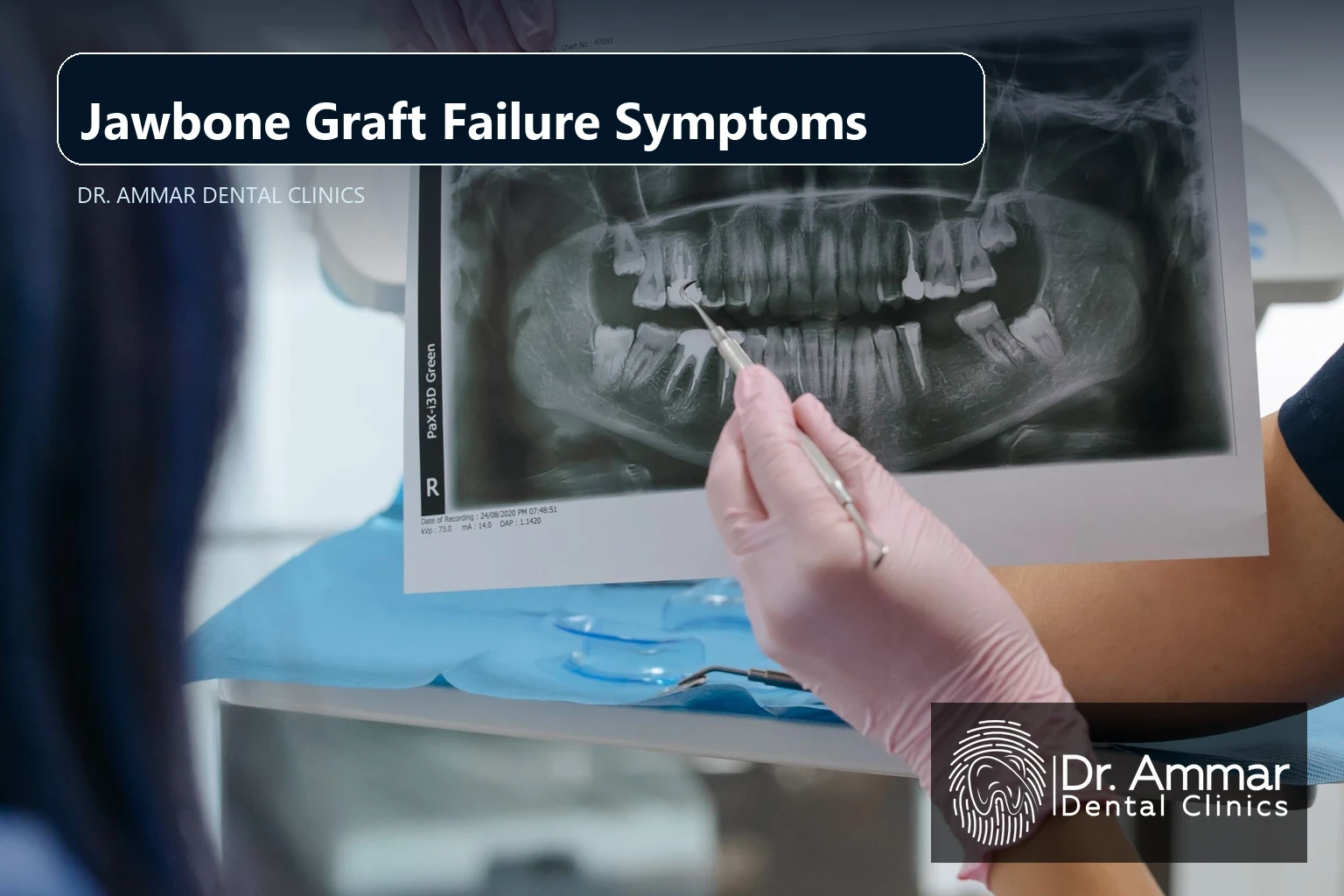
Symptoms of Jawbone Graft Failure
Jawbone implantation is an important step in some cases of bone loss, especially when there is a need to prepare the jaw to complement dental implants. However, the bone healing process may not go as expected in some cases, which makes paying attention to the symptoms of jawbone implant failure an important step to detect any problem and deal with it in a timely manner.
The appearance of pain or swelling after the procedure does not necessarily mean that the vaccination has failed, as some symptoms may be a normal part of the recovery phase, while unusual signs need to be evaluated by a doctor. What are the reasons for jaw bone implant failure? How can we detect the problem early? Is it possible to treat jawbone implant failure and reconfigure the jaw to complete dental implants?
In this article, we will learn about the symptoms of jaw bone implant failure, the most prominent reasons that may lead to the bone not healing as expected, clarifying methods of diagnosis and treatment, and the most important tips that help support the success of the bone implant and complete the dental implant journey. Finally, we will recommend to you the best clinic to treat cases of jaw bone implant failure. Just keep reading with us until the end.
What are the symptoms of jawbone implant failure?
Some signs during the first period after jawbone transplantation may reveal a problem with the healing of the graft area, especially when symptoms are strong or continue without noticeable improvement. The most prominent symptoms of jawbone implant failure that require attention are:
- Severe or persistent pain: especially if it does not improve gradually with the medications and painkillers prescribed by the doctor.
- Severe swelling: Swelling continues to a noticeable degree or increases after the first days instead of decreasing.
- Frequent or heavy bleeding: Continuing unusual bleeding may indicate a problem that needs to be checked.
- Signs of infection: such as severe redness, heat in the area, discharge, or the appearance of a foul odor from the surgical site.
In some cases, the problem does not become apparent until recovery progresses, especially if the bone graft does not fuse with the jawbone as expected. Signs and symptoms of advanced jawbone implant failure may include:
- Gum recession: The gums recede around the graft area with part of the bone or graft material visible.
- Implant instability: If the implant was placed after bone implantation, feeling its movement or poor stability may indicate a problem with the bone support.
- Persistent sinus problems: In cases of sinus lift, persistent discharge, pain, or headaches in the sinus area may require a doctor’s evaluation.
These signs alone do not confirm graft failure, so a medical examination with an experienced doctor remains a necessary step to accurately evaluate the condition of the bone and the transplanted area.
If you notice any symptoms of jawbone implant failure or unusual signs, contact us at Dr. Ammar Clinics to evaluate your condition and determine the appropriate steps to complete your treatment before any more serious complications occur.
When do symptoms of jawbone implant failure appear?
Some signs and symptoms of jawbone implant failure may appear during the first days or weeks, especially if an infection or problem occurs in the graft area, while the problem may not become clear except during the recovery phase when the bone does not heal or the graft does not integrate as expected.
Therefore, the detection of bone graft failure depends not only on the timing of the symptoms, but also on the nature and persistence of the symptoms and the results of the examination and x-rays with the doctor.
Reasons for jaw bone implant failure
Although jawbone implants help prepare the area for dental implant completion, their success depends on the healing of the bone and the stability of the graft area during the recovery period.
Some factors may affect this stage and increase the possibility of jawbone implant failure, the most prominent of which are:
- The presence of inflammation or infection in the mouth.
- Neglecting oral hygiene after the procedure.
- Smoking during the recovery period.
- Pressing or tampering with the vaccination area.
- Movement or contamination of the vaccination material.
- Failure to adhere to the doctor’s instructions.
- Lack of doctor experience.
- The presence of health factors that affect bone healing.
- Complexity of the case and failure to plan it appropriately.
Therefore, the appearance of any of the symptoms of jawbone implant failure should not be ignored; Early evaluation helps the doctor determine the cause of the problem and deal with it before it affects the next steps of dental treatment.
What do you do as soon as you feel any of the symptoms of bone graft failure?
When a symptom of jawbone implant failure appears, it does not necessarily mean that the procedure has failed, but it is important to deal with the symptoms early and not wait until they get worse, as the correct action at this stage helps to discover the cause of the problem and determine the appropriate step.
Therefore, when you feel any of the symptoms of jawbone implant failure, be sure to do the following:
- Contact the doctor as soon as unusual symptoms appear to conduct an examination and determine the cause and treatment early.
- Conducting the necessary tests and x-rays to evaluate the condition of the bone and the graft area.
- Adherence to medications and instructions prescribed by the doctor.
- Avoid touching or putting pressure on the vaccination area.
- Maintain oral hygiene according to medical instructions.
- Avoid smoking during the recovery period.
- Commitment to follow-up appointments to monitor bone healing.
Thus, early treatment of any unusual symptoms and regular medical follow-up help discover the problem in a timely manner and determine the necessary action to maintain the integrity of the grafting area and complete the dental implant steps safely.
How is jawbone implant failure diagnosed?
Diagnosis of jawbone implant failure begins with examining the graft area and reviewing the symptoms of jawbone implant failure that appeared during the recovery period. Then the doctor determines the extent of bone healing and stability of the graft area using appropriate examinations and x-rays. Diagnostic steps may include:
- Clinical examination to evaluate the gums, the vaccination site, and the presence of signs of inflammation or exposure of the vaccination material.
- X-rays to evaluate bone formation and the extent of fusion of the graft material with the jaw bone.
- Review symptoms such as persistent pain, increasing swelling, discharge, or lack of improvement in the area.
- Evaluate the stability of the area to ensure that there is no movement or problem affecting bone healing.
Jawbone implant failure cannot be confirmed based on the symptoms of jawbone implant failure felt by the patient alone; Contact us at Dr. Ammar's clinics to conduct the necessary tests, evaluate the condition of the bone, and determine the appropriate steps for treatment.
Treatment of jaw bone implant failure
Treatment for jawbone implant failure does not begin with repeating the procedure directly. Rather, it begins first with understanding the cause of the problem and carefully evaluating the condition of the bone, the graft area, and the symptoms of jawbone implant failure that each case suffers from. The cause may be inflammation, poor bone healing, or a problem in the graft area that requires appropriate intervention.
Based on the examination and x-rays, the doctor may suffice with treating the problem and monitoring bone healing, while some cases may require removing the damaged tissue or remnants of the graft, cleaning the area well, and then re-grafting the bone after preparing it appropriately.
The timing of bone replantation varies from one case to another, so the doctor determines the treatment steps according to the extent of bone loss and the jaw’s response to recovery, with the aim of preparing the area to complete the dental implant when it is ready.
Is it possible to replant the jawbone after graft failure?
Yes, it is possible to replant the jawbone after graft failure in some cases, but the decision depends on the cause of the failure, the condition of the bone and gums, and the extent of healing in the area. The doctor first begins by treating the problems and symptoms of jawbone implant failure, such as inflammation or damage to the graft area, and evaluates the condition of the jaw through examination and x-rays to determine its readiness for regrafting.
After preparing and stabilizing the area, a new bone graft can be placed if the case requires it, with the possibility of using a jawbone implant alternative when needed to take advantage of the available bone and avoid adding new bone. The most prominent of these options are:
- Short implants: to take advantage of the amount of bone available in areas of limited height.
- Inclined implants: to bypass areas of bone deficiency and take advantage of areas most suitable for implant placement.
- All-on-4 or All-on-6 technology: to distribute implants in carefully positioned positions to support a complete set of teeth.
- Zygomatic implants: For some cases of severe bone loss in the upper jaw, they are fixed to the cheekbone.
Graft failure does not mean that bone replantation is always the only solution; The choice of regrafting or one of the alternatives depends on the amount of bone, its location and condition, in addition to the number of missing teeth and the required treatment plan.
If you are suffering from symptoms of jaw bone implant failure and are looking for suitable alternatives for your condition, contact us at Dr. Ammar Clinics and book your consultation to evaluate the condition of your jaw and determine the appropriate steps for your treatment.
Tips to avoid jawbone implant failure
After we learned about the symptoms of jawbone implant failure, it is important to adhere to a set of instructions that help support bone healing and reduce the chances of complications occurring during the recovery period, the most prominent of which are:
- Adhere to the medications and antibiotics prescribed by the doctor, and do not stop them on your own.
- Avoid forceful rinsing or spitting during the first days so that the surgical area is not affected.
- Gently brush the teeth while avoiding direct contact with the vaccination area.
- Commitment to using mouthwash if prescribed by the doctor, in the specified manner and duration.
- Eat soft foods during the first period, and avoid hard or sharp foods that may put pressure on the surgical site.
- Do not chew on the side of the bone implant, especially during the period specified by the doctor.
- Avoid smoking during the recovery period, as it may affect the healing of tissue and bone.
- Avoid touching the vaccination area with your tongue or fingers or trying to move any part of it.
- Avoid intense physical exertion during the first period, and return to activity gradually according to the doctor’s instructions.
- Commitment to follow-up appointments to ensure the stability of the graft area and monitor bone formation.
- Contact your doctor if you experience severe or increasing pain, swelling that does not improve, persistent bleeding, discharge, unusual odor, or high temperature.
Thus, adhering to recovery instructions and following up with your doctor will help protect the graft area, support bone healing, and reduce the chances of complications during recovery, so you are ready to move on to the next steps of dental implants with greater confidence.
Why choose Dr. Ammar Clinics?
Choosing the right doctor from the beginning is one of the most important steps that helps reduce the possibility of jawbone implant failure. The success of the procedure does not depend on bone implantation only, but is also related to evaluating the condition of the jaw, choosing the appropriate technique, careful planning of the surgery, and monitoring bone healing after the procedure. Therefore, dealing with a doctor who has experience in cases of jaw bone transplantation and grafting helps to discover the factors that may affect the success of treatment and deal with them within a treatment plan appropriate for each case.
Among the most prominent advantages that make Dr. Ammar’s clinics a suitable choice for evaluating and treating jaw bone implant cases are:
- Carefully evaluate the condition of the jaw before determining the appropriate procedure.
- Planning treatment according to each patient’s condition and the amount of available bone.
- Pay attention to diagnosing the causes of vaccination failure before repeating the procedure.
- Evaluating cases of jawbone implant failure and determining the possibility of regrafting.
- Choose the appropriate technique according to the location and degree of bone loss.
- Follow the recovery phase to ensure that the vaccination area has healed.
- Develop an integrated treatment plan that paves the way for the completion of dental implants.
- Providing suitable alternatives when bone replantation is not the best option.
- Follow up with the patient after the procedure and deal with any unusual symptoms early.
Finally, the symptoms of jawbone implant failure do not necessarily mean losing the opportunity to complete a dental implant, but dealing with them early helps to find out the cause, evaluate the condition of the bone, and choose the appropriate treatment step. The sooner the evaluation begins, the more it is possible to deal with the problem before it affects the next stages of treatment.
At Dr. Ammar Dental, Cosmetic and Implant Clinics, we are keen to accurately evaluate the condition of the jaw and the graft area, determine the cause of the problem and develop a clear treatment plan that suits each patient’s condition.
If you notice unusual symptoms after a jawbone implant, don't let anxiety delay your next step; Contact us and book your consultation now with us at Dr. Ammar’s clinics, and let our medical team help you find out the cause of the problem and determine the appropriate steps to complete dental implants and restore your smile and the function of your teeth with confidence and reassurance.