
The latest methods for dental implants
Discover the latest dental implant methods, featuring digital technologies and immediate implantation. Restore your smile with confidence through advanced solutions that offer stability and long-lasting, natural-looking results.
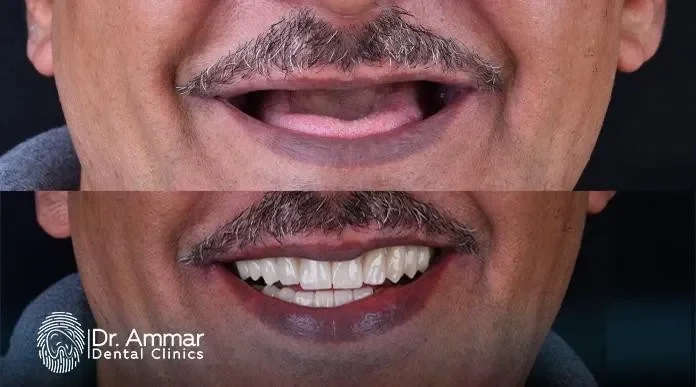
Have you lost a tooth and are considering replacing it, but fear surgery or a lengthy treatment period? The field of dental implants has witnessed significant advancements, making it possible to plan implant placement using computers and 3D imaging, and even place temporary teeth early in some cases. The latest dental implant methods help improve planning accuracy and provide treatment options suited to various patient needs. In this article, we explore digital implants, surgical guides, immediate implants, full-arch replacement techniques, along with an explanation of features, costs, and how to choose the appropriate technique at Dr. Ammar Clinics for Dentistry, Cosmetics, and Implants.
What Are the Latest Dental Implant Methods?
The latest dental implant methods rely on technologies that assist the dentist in studying the jawbone and determining the exact location and angle of the implant prior to surgery. The most prominent methods include digital implants, 3D surgical guides, immediate implants, minimally invasive surgery, and full-arch replacement techniques.
What is new in dental implants is the evolution of imaging, digital planning, and precise execution of the treatment plan, rather than necessarily changing the implant fixture itself. Modern implant methods also differ in their objectives; some improve placement accuracy, while others focus on timing or replacing multiple teeth.
There is no single "latest method" that suits everyone; the dentist determines the choice based on bone volume, gum health, and the number of missing teeth. More than one technique can be combined to reach an optimal plan. If you wish to benefit from the latest dental implant methods, book your consultation now at Dr. Ammar Clinics, and let our medical team help you choose the most suitable technique using modern diagnostic and digital planning tools.
Computer-Aided Digital Dental Implants
Digital implants are among the most prominent modern techniques, relying on 3D cone-beam computed tomography (CBCT) and planning software to evaluate bone and determine the implant's position relative to neighboring teeth, nerves, and sinuses.
Virtual planning helps the dentist choose the appropriate implant size, angle, and future crown position. This step is a foundational element in modern techniques, especially when available space is limited or anatomical structures require caution.
Digital systems also allow for optical digital impressions instead of traditional molds during certain treatment phases. However, technology does not replace clinical experience or professional evaluation.
At Dr. Ammar Clinics, we utilize digital planning and 3D imaging in dental implants to help select implant positions tailored to each individual case.
3D Surgical Guide Dental Implants
Surgical guide implants connect digital planning directly to surgical execution. After studying scans and digital impressions, the dentist designs a custom template that can be manufactured using 3D printing, which guides surgical instruments to the pre-determined position.
This technique is characterized by:
Enhanced Guidance Accuracy: Helps minimize discrepancies between the planned and actual implant positions.
Clear Surgical Path: Helps the dentist adhere strictly to the planned angle and depth.
Supports Pre-Planning: Allows detailed study of the relationship between the implant and the final restoration.
Minimized Surgical Intervention: In some cases, it allows implantation without raising a wide gum flap.
Scientific studies indicate that computer-guided surgery can improve implant placement accuracy compared to manual methods, though this does not guarantee zero complications or automatic success.
At Dr. Ammar Clinics, we offer digitally designed surgical guide implants, selecting them when a patient's condition is suitable to maximize their benefits.
Immediate Dental Implants
One of the topics patients inquire about most is the possibility of placing an implant immediately after tooth extraction, without waiting several months for the extraction socket to heal.
Immediate implants mean fixing the fixture into the extracted tooth socket during the same session, provided bone and tissue conditions allow for it. However, this is different from immediate loading, which involves securing a dental prosthesis shortly after implant placement.
Here lies the importance of understanding the latest advancements: immediate implants shorten certain phases of treatment, but they do not necessarily mean placing the final crown on the same day, nor are they suitable for all patients.
Selecting this approach requires evaluating bone walls, the presence of inflammation, and achieving adequate primary stability. Therefore, the best treatment plan relies on procedural safety and implant stability rather than speed alone.
Minimally Invasive (Flapless) Dental Implants
Among the latest methods is minimally invasive surgery, where an implant can be placed through a small opening without raising a large gum flap in suitable cases.
This method may help reduce tissue trauma and improve recovery times, but it does not mean surgery-free implementation; the fixture still requires fixation within the jawbone.
Feasibility depends on bone volume, gum architecture, implant site, and planning precision. A dentist may prefer traditional flap surgery when direct bone visualization or bone grafting is required.
Therefore, when comparing modern methods, a smaller surgical incision is not always superior; tissue health and correct implant positioning outweigh the size of the opening.
All-on-4 and All-on-6 Dental Implant Techniques
When most or all teeth in a jaw are missing, replacing every single tooth with an individual implant is often unnecessary. Here, All-on-4 and All-on-6 techniques serve as modern solutions designed to support a fixed prosthesis replacing an entire arch.
The All-on-4 technique relies on four carefully distributed implants, while All-on-6 uses six implants to support the restoration. Increasing the count does not automatically mean a better option for every patient; implant distribution, bone quality, and prosthetic design remain core planning factors.
These options represent advanced solutions for multiple tooth replacements and may allow early temporary restoration placement if required stability is achieved. At Dr. Ammar Clinics, full-arch rehabilitation services are provided within structured treatment plans tailored to patient needs.
What Are the Advantages of Modern Implant Techniques?
The latest methods improve surgical planning and offer diverse options for replacing missing teeth, though benefits vary by technique and clinical case.
Key advantages include:
Improved Placement Accuracy: Digital guidance tools execute surgical plans with greater precision.
Pre-Procedural Bone Analysis: 3D imaging reveals available spaces and critical anatomical relationships.
Reduced Invasiveness: Certain cases allow procedures through a limited gum opening.
Shortened Treatment Phases: Immediate loading or early protocols reduce timelines for eligible patients.
Optimized Prosthetic Planning: Digital data helps design restorations that harmonize with implant positions and occlusion.
These benefits show that advanced techniques focus heavily on enhanced planning capabilities. Nevertheless, success remains tied to clinical expertise, patient health, and compliance with care instructions.
Modern vs. Traditional Dental Implants
Modern methods differ from traditional techniques in planning and surgical guidance tools rather than the core objective—securing an artificial root within the jawbone. The following table highlights key comparisons:
Comparison Point | Modern Digitally Guided Implants | Traditional Implants |
Planning | Relies on 3D imaging and digital software. | Relies on clinical examination, X-rays, and manual planning. |
Implant Positioning | Utilizes a surgical guide to direct placement. | Determined intraoperatively by the clinician without digital guides. |
Surgical Intervention | May allow a localized, minimal opening in the gums. | Often requires raising a gum flap depending on the case. |
Precision | Enhances adherence to pre-planned implant positions. | Relies more heavily on manual navigation and clinical experience. |
Cost | May be higher due to imaging, design, and guide fabrication. | May be lower in certain straightforward cases. |
These differences do not mean modern techniques achieve superior outcomes universally. Traditional implants remain highly effective when properly planned and executed; the choice depends on medical requirements.
How Are Modern Dental Implants Performed?
Modern procedures begin with patient evaluation, assessing gum and bone health, followed by a customized plan matching missing tooth counts and locations. Digital tools map out implant positions prior to intervention.
Key steps include:
Medical Evaluation: Reviewing dental, gum, and medical history.
3D Imaging: Assessing jawbone dimensions and surrounding anatomical structures.
Digital Planning: Determining optimal implant position, size, and angle.
Surgical Guide Design: Preparing a specialized guiding template when required.
Fixture Placement: Performing surgery according to the established plan.
Prosthetic Restoration: Securing temporary or final restorations at the appropriate stage following stability verification.
Treatment timelines vary based on bone grafting requirements and loading protocols. At Dr. Ammar Clinics, we ensure patients understand expected stages before treatment begins, leveraging available digital tools.
What Are the Best Dental Implant Techniques?
No single technique is universally "best" for all patients; surgical guide placement fits cases requiring meticulous planning, while immediate implants suit scenarios with robust bone density.
When selecting the appropriate approach, the clinician considers bone quality, gum health, missing tooth count, and auxiliary procedures. Some plans integrate multiple techniques.
Benefiting from modern options means choosing the method matching specific medical needs rather than automatically picking the fastest or most expensive route. Book your consultation at Dr. Ammar Clinics to evaluate your case and explore suitable alternatives.
Factors Determining Modern Dental Implant Costs
Costs vary from case to case depending on implant types, technologies utilized, and necessary procedures. Final pricing requires a clinical examination and treatment plan.
Key cost factors include:
Implant Brand/System: Prices vary based on manufacturer and chosen system.
Number of Missing Teeth: Costs rise with increased fixture and restoration counts.
Digital Planning: 3D scans and guide fabrication may add supplementary fees.
Jawbone Condition: Patients requiring bone grafting or preparatory treatments incur additional steps.
Restoration Type: Single crowns differ in cost from multi-unit bridges or full-arch rehabilitation.
At Dr. Ammar Clinics, premium implants start from 15,000 EGP, and advanced systems start from 20,000 EGP, with total costs varying based on the personalized treatment plan and additional services.
Contact us to book your consultation and discover tailored pricing options for your case.
Why Choose Dr. Ammar Clinics for Advanced Dental Implants?
At Dr. Ammar Clinics for Dentistry, Cosmetics, and Implants, we blend medical expertise with digital planning to deliver comprehensive tooth replacement solutions. We emphasize comprehensive patient evaluations prior to technique selection, prioritizing precision, comfort, and follow-up.
Key clinic advantages:
Over 10 Years of Experience: Extended expertise in restorative, cosmetic, and implant dentistry.
3D Digital Planning: Leveraging CT scans and digital impressions to study implant sites.
Surgical Guide Integration: Utilizing 3D-printed templates for appropriate clinical scenarios.
Diverse Implant Portfolios: Providing multiple implant systems, including advanced European options.
Full-Arch Solutions: Delivering surgical and prosthetic restorations for multi-tooth loss.
Integrated Care Ecosystem: Offering periodontal treatment, prosthodontics, and surgery under one roof.
Post-Treatment Follow-Up: Providing dedicated maintenance instructions and monitoring schedules.
We strive through modern technologies to offer an experience rooted in accurate diagnosis and meticulous planning, treating technology as a tool that enhances—rather than replaces—medical judgment.
Ultimately, choosing modern methods depends on understanding each technique's capabilities and suitability rather than chasing fast procedures. Digital advancements offer valuable options to optimize planning and replace missing teeth, while professional evaluation and clinical oversight remain paramount.
If you wish to restore your smile and leverage modern dental implant methods, start with a proper medical evaluation. Book your appointment today at Dr. Ammar Clinics, and let our team guide you toward a treatment plan aligned with your needs.
At Dr. Ammar Clinics... experience you can trust, and precision dedicated to every detail of your smile. Book your consultation now and begin your journey toward replacing missing teeth.