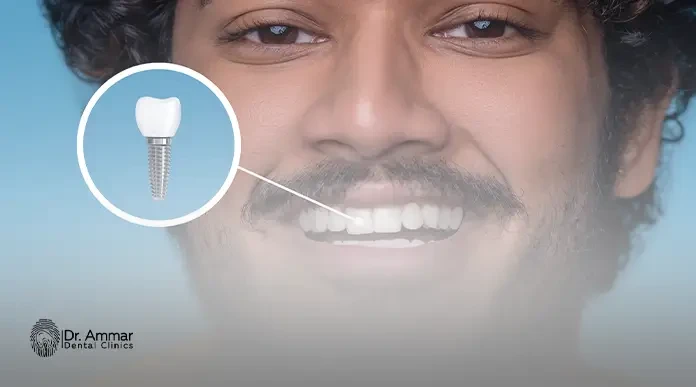
Cost of replacing a missing tooth
The absence of a single molar may seem simple at first, but it can actually cause a chain of problems affecting overall oral health, such as chewing difficulties and the shifting of adjacent teeth. Therefore, replacing a missing tooth becomes a medical necessity rather than just a cosmetic solution.
However, the most important question remains: What is the price of a tooth replacement after extraction in Egypt?
In fact, the price varies based on the type of restoration used (implant, fixed bridge, or removable denture), as well as the oral condition of each patient.
In this article, we detail the price of replacing a tooth after extraction in Egypt, the factors affecting it, and the differences between types of restorations to help you choose the ideal solution.
Price of Replacing a Tooth After Extraction
The price of replacing a tooth after extraction ranges between 5,000 and 8,500 EGP, with costs varying from case to case based on several factors that directly impact the final price.
Key factors determining the cost include:
- Quality of the Zirconia material used.
- The doctor's expertise and the medical center's level.
- The condition of the tooth and mouth.
- The number of required restorations.
- The level of equipment within the clinic.
If you are wondering: "How much does it cost to replace a tooth after extraction?" the answer depends on your specific case. Therefore, it is best to contact Dr. Ammar to determine the appropriate cost and choose a solution that combines quality with a suitable price.
What is the Technique for Replacing a Tooth After Extraction?
Tooth replacement after extraction is a medical solution used to compensate for missing teeth. Artificial restorations are used to restore the aesthetic appearance of the mouth and the natural functions of the teeth, such as proper chewing and improving speech and pronunciation.
This technique includes several types, such as fixed bridges, removable dentures, and dental implants. The choice depends on the oral condition, the number of missing teeth, and the specialist’s recommendation.
Importance of Replacing a Tooth After Extraction
The role of tooth replacement goes beyond improving appearance; it extends to protecting teeth and bones from future problems.
The importance includes:
- Restoring natural chewing function, which aids digestion.
- Preserving the jawbone and preventing atrophy in the empty area.
- Improving speech, especially when losing back molars.
- Preventing adjacent teeth from shifting and maintaining their alignment.
- Closing gaps to reduce food accumulation and decay.
Reasons for Tooth Extraction
Extraction is a procedure doctors resort to when it is impossible to preserve or treat the tooth. Key reasons include:
- Severe decay that cannot be treated with fillings or root canals.
- Infection or abscess threatening surrounding tissues.
- Significant erosion or fracture making the tooth unrestorable.
- Advanced gum disease leading to tooth mobility.
- Crowding, especially before orthodontic procedures.
- Impacted or abnormally growing wisdom teeth.
- Severe dental injuries from accidents or trauma.
After extraction, the need arises to choose the right solution to restore oral functions.
Types of Tooth Replacement (Which is Best for You?)
When searching for costs, it is essential to know the available types, as the choice affects not only the cost but also long-term comfort and results.
Here are the main options:
|
Feature |
Bridge |
Crown |
Implant |
|
Definition |
Artificial tooth fixed between adjacent teeth |
A cap placed over a partially existing tooth |
An artificial root implanted into the bone |
|
Cost |
Medium |
Medium |
High |
|
Timeframe |
Fast (days) |
Fast (days) |
Long (3–6 months) |
|
Durability |
Good |
Good |
Very High |
|
Lifespan |
5 – 10 years |
Based on tooth condition |
Up to 20 years or more |
|
Natural Look |
Good |
Very Good |
Best / Closest to natural |
|
Suitability |
Strong adjacent teeth |
Partially remaining tooth |
Permanent / Independent solution |
|
Impact |
Requires grinding adjacent teeth |
Does not affect other teeth |
Does not affect adjacent teeth |
Is it Possible to Replace an Extracted Tooth?
Yes, an extracted tooth can be easily replaced through options like bridges, crowns, or implants. The choice depends on:
- Oral, gum, and bone health.
- Duration since the tooth was lost.
- Condition of adjacent teeth.
- Availability of sufficient jawbone (especially for implants).
- Available budget.
Consulting a doctor for a precise evaluation is always recommended.
How to Choose the Best Type of Replacement?
The choice depends on your condition and treatment goal:
- For a quick solution: A bridge or crown is most suitable.
- For a limited budget: Traditional porcelain restorations are an economic choice.
- For a permanent solution: Dental implants are the best.
- If adjacent teeth are unsuitable: Implants are preferred.
- If time has passed since extraction: You may need additional procedures like bone grafting.
How Long Does the Procedure Take?
The duration depends on the procedure. Traditional restorations like bridges or crowns can be completed within two days to a week. Dental implants take longer, ranging from 3 to 6 months, due to the implantation and bone healing phases before final placement.
What Happens if You Don't Replace the Extracted Tooth?
Leaving the space vacant may seem harmless initially, but over time, several problems arise:
- Teeth tend to drift toward the gap, causing misalignment.
- Difficulty in chewing.
- Erosion of other teeth due to increased load.
- Jawbone weakness due to lack of stimulation, affecting future implant chances.
- Changes in facial shape or smile over time.
Is the Procedure Painful?
Replacing a tooth after extraction is generally painless, as it is performed under local anesthesia. Patients may feel slight temporary discomfort afterward, which quickly disappears with prescribed painkillers.
Tips After Tooth Replacement
- Maintain daily hygiene using a brush and medical floss.
- Use a soft toothbrush to protect gums and the restoration.
- Periodic follow-ups with the doctor to ensure stability.
- Avoid hard foods and staining beverages.
- Care for removable dentures by soaking and cleaning them carefully.
In conclusion, the price of replacing a tooth after extraction is linked to various factors. You should consider the value provided in terms of comfort and long-term results rather than just a fixed price.