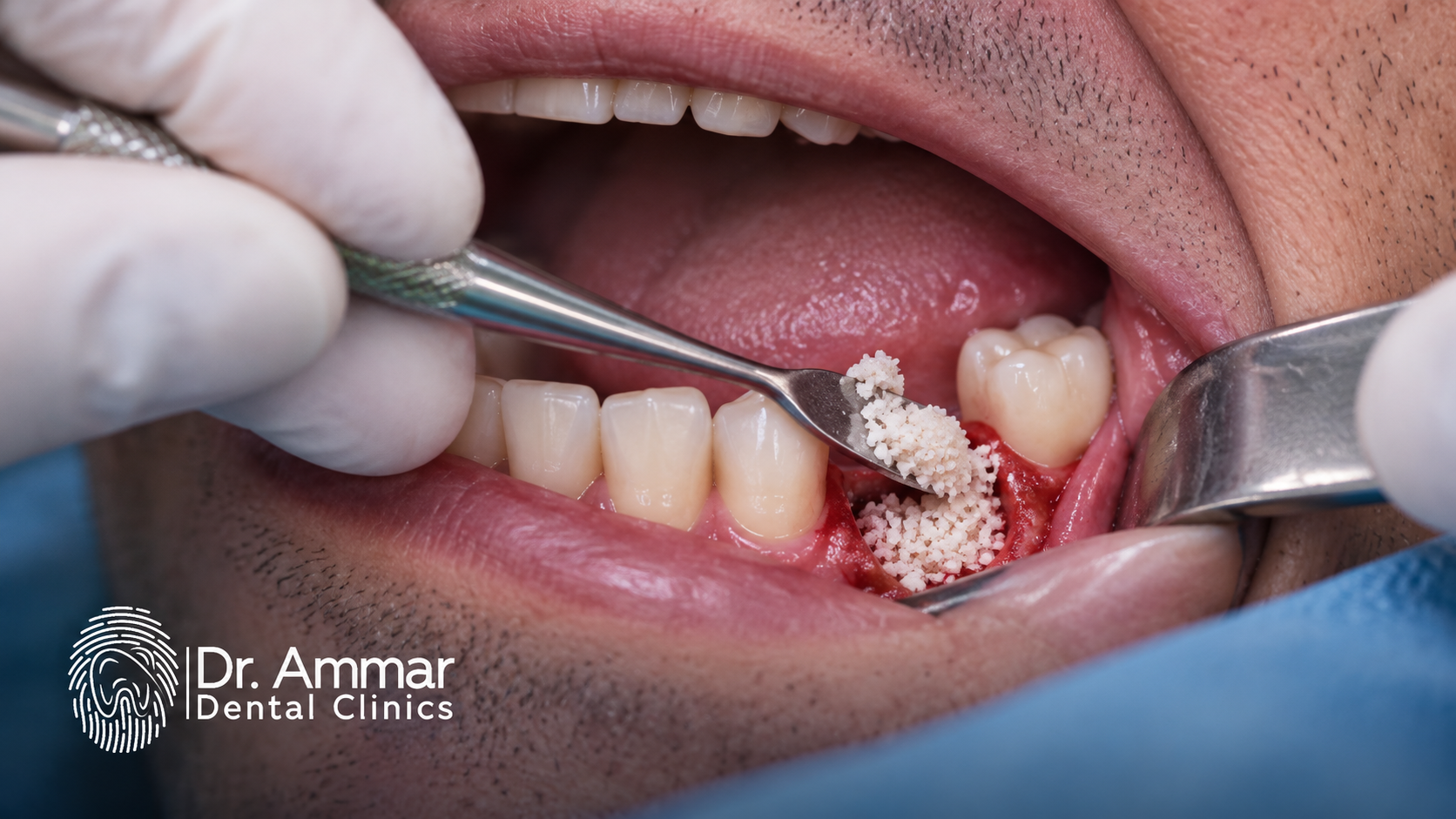
Dental bone grafting
In this comprehensive guide, we cover everything you need to know about dental bone grafting, including its primary indications, signs of bone loss, procedure steps, benefits, risks, post-treatment recovery, and why Dr. Ammar’s Clinics is a recommended practice for bone augmentation and complex dental implant care.
What Is a Dental Bone Graft?
A dental bone graft is a specialized surgical procedure aimed at augmenting or replacing lost or deficient jawbone tissue. By placing a compatible bone graft material into the area of deficiency, it creates a robust structural base that supports future dental implant placement.
Bone grafting is indicated when available bone volume is insufficient to anchor a dental implant securely. Bone loss can result from prolonged tooth loss, natural jawbone resorption, advanced periodontal disease, or traumatic jaw injuries.
Beyond simply increasing bone volume, a bone graft acts as a scaffold that stimulates the body to regenerate natural bone tissue gradually. Over time, the graft material integrates with existing bone, preparing the jaw to receive a stable, long-lasting dental implant.
The choice of grafting material and surgical technique varies from patient to patient. Every treatment plan begins with a comprehensive diagnostic examination and 3D imaging to assess bone density, site volume, and anatomical needs.
If you suspect jawbone loss and are considering dental implants, contact Dr. Ammar’s Clinics to schedule a comprehensive diagnostic evaluation and discuss your bone grafting options.
Indications for Dental Bone Grafting
A patient requires a dental bone graft when remaining jawbone height, width, or density is insufficient to support an implant safely. This loss of support often stems from prolonged tooth loss, advanced periodontitis, or localized structural resorption.
Primary Reasons for Bone Grafting:
- Prolonged Tooth Loss: Long-term absence of tooth roots deprives the jawbone of functional stimulation, causing gradual resorption.
- Advanced Periodontitis: Chronic gum disease damages supporting alveolar bone structures.
- Delayed Tooth Replacement: Postponing tooth replacement after an extraction allows bone loss to progress.
- Past Dental Infections or Abscesses: Localized bacterial infections can destroy surrounding bone tissue.
- Traumatic Jaw Injuries: External impact or trauma can fracture or compromise alveolar bone.
- Inherent Bone Density Deficits: Naturally thin or porous bone architecture.
- Maxillary Sinus Proximity: Insufficient vertical bone height in the posterior upper jaw due to sinus pneumatization (requiring a sinus lift).
- Long-Term Removable Denture Use: Dentures place uneven pressure on ridges, accelerating underlying bone loss over time.
Additional Factors Influencing Bone Loss:
- Long-Term Medications: Extended use of specific pharmaceuticals, such as systemic corticosteroids or chemotherapeutic agents.
- Chronic Health Conditions: Uncontrolled diabetes or systemic conditions affecting bone turnover.
- Advanced Age: Natural reductions in bone density, particularly in patients over 65.
- Lifestyle Factors: Tobacco use, smoking, and poor daily oral hygiene.
A comprehensive clinical assessment and 3D imaging (CBCT) determine whether a bone graft is necessary for your specific case.
Signs of Jawbone Loss
Jawbone loss often develops silently without significant pain or obvious symptoms. Many patients only discover bone deficits during a routine examination or when planning for dental implants.
However, subtle clinical signs may indicate bone resorption:
- Loose or shifting adjacent teeth.
- Delayed gingival healing following a tooth extraction.
- Changes in gum contours or receded gum margins.
- Visible exposure of underlying bone margins within the mouth.
- Numbness, tingling, or a feeling of heaviness in the jaw.
- Localized gum tenderness, swelling, or redness related to underlying inflammation.
- Persistent sores or discharge in the affected jaw area.
Because these signs do not reveal the exact extent of bone loss on their own, professional 3D imaging is required to evaluate the underlying jaw structure.
Benefits of Dental Bone Grafting
Dental bone grafting provides several clinical advantages for patients preparing for implant therapy:
- Increases Bone Volume: Rebuilds lost height and width in deficient jaw areas.
- Ensures Implant Stability: Provides a solid structural foundation for primary implant anchor stability.
- Preserves Jaw Architecture: Prevents further facial ridge collapse and maintains natural jawline contours.
- Restores Facial Aesthetics: Minimizes premature aging appearance caused by lack of bone support beneath the lips and cheeks.
- Restores Oral Function: Supports stable, fully functional bite restoration after missing teeth are replaced.
- Expands Implant Candidacy: Opens treatment pathways for patients previously told they lack sufficient bone for implants.
The Bone Grafting Procedure: Step-by-Step
Bone grafting follows a precise clinical sequence to ensure optimal healing and bone integration:
- Diagnostic Evaluation: Assessment of bone loss volume and site geometry using 3D CBCT scans.
- Anesthesia Administration: Application of local anesthesia (or sedation) to ensure complete comfort during surgery.
- Site Preparation: Creating a small incision in the gum tissue to expose the targeted bone deficit.
- Graft Placement: Precise application of selected bone graft material into the deficient area.
- Graft Stabilization: Securing the graft material with specialized protective membranes or structural pins if necessary.
- Suturing & Closure: Closing the soft tissue site carefully to protect the graft during early healing.
- Osseous Integration: Over several months, the body naturally incorporates the graft material, forming dense new bone.
- Follow-Up & Assessment: Evaluating graft healing via X-rays before proceeding to implant placement.
Can Jawbone Regenerate Naturally?
On its own, significant jawbone loss does not naturally regenerate back to its original volume. Once alveolar bone resorbs—especially following long-term tooth loss or periodontal damage—the body does not rebuild the missing height or width without intervention.
When bone volume is insufficient for implants, surgical bone grafting is required to provide the scaffold necessary for new bone growth.
Can Bone Grafting and Immediate Implants Be Combined?
Yes. In specific clinical cases, a bone graft can be placed simultaneously with an immediate dental implant. This is feasible when remaining natural bone provides sufficient primary stability to hold the implant securely, and the bone deficit is minor or localized.
However, simultaneous placement is not suitable for every presentation. When severe bone loss, active localized infection, or inadequate primary stability is present, a staged approach—placing the graft first and allowing complete healing before implant placement—is necessary for predictable results.
What to Expect After Surgery & Post-Care Guidelines
After a bone graft procedure, a healing period is required for the graft to incorporate properly. Mild, temporary post-operative symptoms are normal parts of the recovery process:
- Localized discomfort or mild soreness at the surgical site.
- Minor swelling or slight bruising around the cheeks or gums.
- Mild oozing during the first 24 to 48 hours.
- Tiny, sand-like graft particles occasionally loosening from the site during early healing.
Essential Post-Operative Care Tips:
- Soft Diet: Eat soft, lukewarm foods during the first few days; avoid chewing on the surgical site.
- Gentle Oral Hygiene: Clean your mouth carefully according to your dentist's specific instructions; avoid rigorous rinsing.
- Protect the Site: Do not disturb, touch, or apply pressure to the surgical area.
- Medication Compliance: Take prescribed antibiotics and anti-inflammatory medications as directed.
- Avoid Smoking: Refrain from traditional and electronic cigarettes, as nicotine severely hinders blood flow and graft integration.
- Limit Physical Exertion: Avoid strenuous exercise or heavy lifting for the period recommended by your surgeon.
- Attend Follow-Ups: Keep all scheduled follow-up visits to monitor healing progress.
Why Choose Dr. Ammar’s Clinics for Dental Bone Grafting?
Predictable bone grafting relies on precise diagnosis, proper material selection, and delicate surgical execution. Dr. Ammar’s Clinics provides comprehensive implant and regenerative care utilizing advanced protocols.
Key Practice Highlights:
- Specialized Expertise: Experienced oral surgeons and implantologists skilled in complex bone reconstruction.
- Advanced 3D Digital Planning: High-resolution 3D CBCT scans for exact mapping of bone deficits.
- Tailored Regenerative Techniques: Selecting optimal grafting materials based on individual clinical needs.
- Integrated Care: Complete treatment plans covering everything from bone preparation to final implant placement.
- Strict Infection Control: High standards of sterilization and surgical safety.
- Ongoing Follow-Up: Careful monitoring throughout every stage of bone integration and recovery.
Schedule Your Consultation Today
Jawbone loss does not have to end your plans for a restored smile. Contact Dr. Ammar’s Clinics today to schedule your diagnostic consultation and take the first step toward restoring your teeth with confidence.