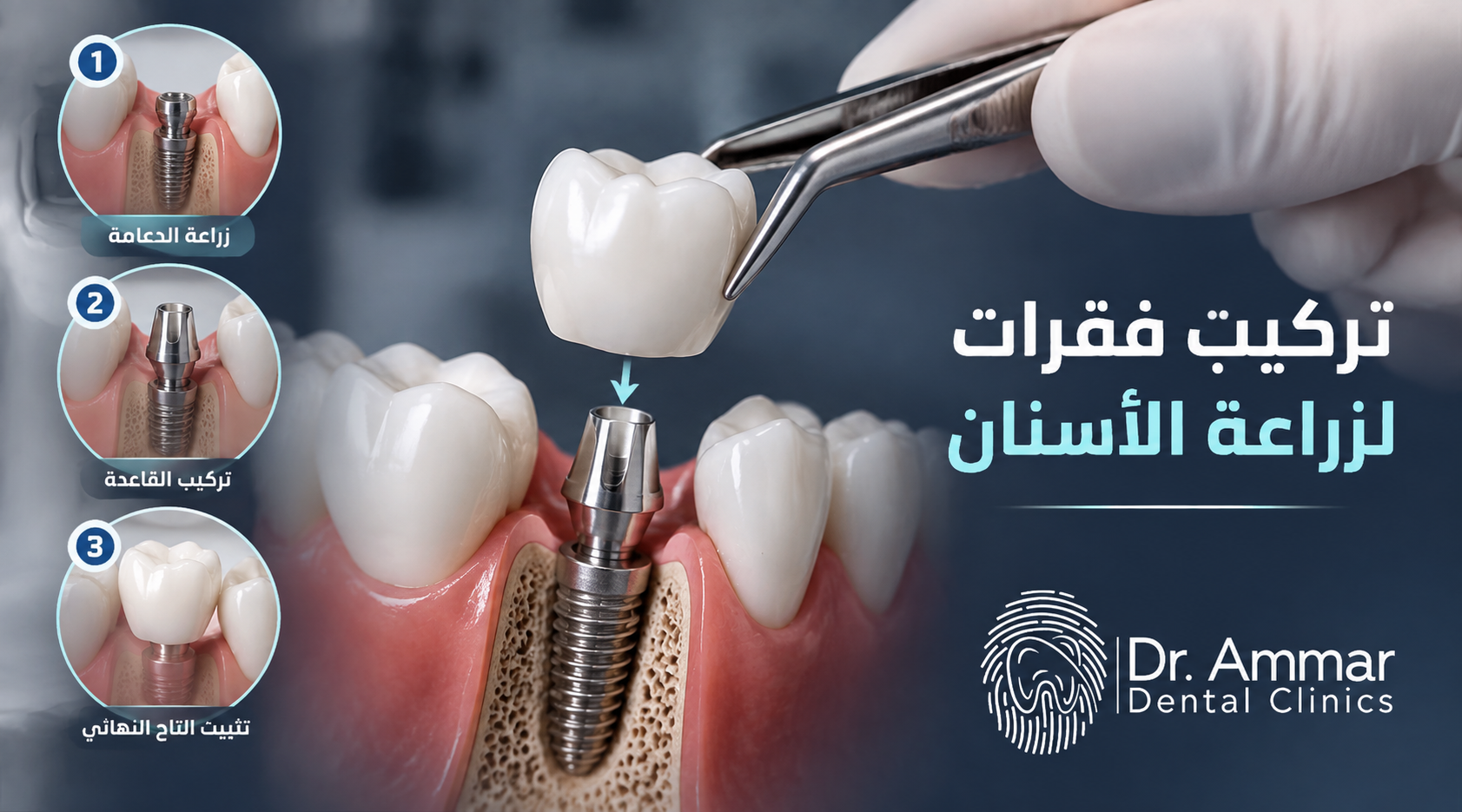
Placement of dental implant components
Tooth loss can be the beginning of another problem when it leads to a reduction in jawbone volume, making the proper placement of dental implants much more challenging. Here, bone grafting for dental implants comes in as a procedure that helps compensate for part of the lost bone and prepares the jaw for the next steps of dental implantation.
However, before taking this step, patients often have several questions, such as: How is jawbone grafting performed? Is bone grafting painful? What is the recovery period? And when can implants be placed after recovery?
In this article, we will learn about bone grafting for dental implants, the cases that require it, the procedure steps, what to expect during recovery, the cost of jawbone grafting, and the role of Dr. Ammar Dental & Cosmetic Clinics in your treatment journey. Keep reading for full details.
What is Bone Grafting for Dental Implants?
Bone grafting for dental implants is a procedure used to replace lost jawbone when the bone quantity or density is insufficient to support dental implants properly. It aims to prepare the area to receive implants once full bone healing and jaw stabilization are achieved.
Before performing a bone graft, the dentist evaluates the amount and location of bone loss using appropriate clinical examinations and X-rays to determine the graft type and technique according to the patient's needs, while monitoring healing before proceeding to the next implantation stages.
At Dr. Ammar Dental & Cosmetic Clinics, we ensure comprehensive care for dental implant cases, including precise jaw assessment and evaluating the necessity of bone grafting, along with a clear plan for each case. If you suffer from jawbone deficiency and are preparing for dental implants, contact us and book your consultation to evaluate your condition and determine the appropriate steps to restore your missing teeth.
When Does a Patient Need Bone Grafting for Dental Implants?
A patient needs bone grafting when the jawbone volume or density is inadequate to anchor implants firmly in the desired location. The success of dental implants depends on proper bone support around the implant, and the dentist determines the need for grafting based on the extent and location of bone loss.
The most prominent cases requiring bone grafting include:
- Loss of jawbone volume due to tooth extraction or long-standing tooth loss.
- Jawbone atrophy resulting from unreplaced missing teeth over extended periods.
- Insufficient bone width or height to securely hold the implant.
- The need for a sinus lift when placing upper jaw implants with inadequate bone height.
- Bone defects around missing teeth that affect the designated implant site.
- Trauma or jaw fractures resulting in bone tissue loss.
- Past oral diseases or infections that caused loss of the supporting bone structure.
Generally, the necessity of bone grafting is determined through a clinical evaluation of the jaw to verify the available bone volume for implant support.
How is Jawbone Grafting Performed?
The bone grafting procedure follows several structured stages aimed at replacing lost jawbone and preparing the area for dental placement. The dentist customizes the procedure details based on the jaw's condition and patient needs, including the following main steps:
- Examination and Planning: Conducting necessary clinical exams and imaging to identify the location and extent of bone loss.
- Anesthesia: Numbing the area using appropriate local anesthesia before starting the procedure.
- Gum Incision: Making a surgical incision to access the target area.
- Placing the Graft Material: Adding suitable bone graft material to the deficient area.
- Covering the Graft Area: Placing a protective membrane over the graft to enhance stability during healing.
- Closing the Gums: Repositioning the gum tissue and closing the surgical incision with sutures.
After the procedure, the recovery and bone integration phase begins, which varies from case to case depending on individual healing responses. The dentist will set the timeframe for placing the dental implants based on the jaw's healing progress.
Because successful bone grafting relies on accurate assessment and close follow-up throughout treatment, contact us at Dr. Ammar Dental & Cosmetic Clinics to book your consultation, assess your needs, and perform your dental implant procedure using the latest technologies.
Is Bone Grafting Painful?
No, patients do not feel pain during the bone grafting procedure itself, as it is performed under appropriate local anesthesia, allowing the steps to be completed comfortably.
After the anesthesia wears off, mild pain or swelling may occur in the treated area. The intensity varies by case, and these symptoms can be easily managed with prescribed pain medications during the recovery period.
Therefore, feeling slight discomfort after bone grafting is expected during recovery, while adhering to the doctor's post-care instructions and attending regular follow-ups ensures a smooth and comfortable healing process.
What Are the Risks and Symptoms of Jawbone Grafting?
Although bone grafting for dental implants is a safe procedure used to rebuild missing bone structure, like any surgical procedure, it may be accompanied by minor symptoms and potential complications that require regular medical follow-up to ensure safe recovery and successful treatment outcomes.
The most common temporary symptoms during recovery include:
- Pain: Mild discomfort may occur after the anesthesia wears off, managed easily with prescribed painkillers.
- Swelling: Swelling around the jaw area may peak within the first 48 hours and gradually subside.
- Bruising: Minor skin discoloration or bruising around the face may appear in the first few days.
- Temporary Numbness: Slight numbness in the treated area due to local anesthesia effects.
- Minor Bleeding: Limited bleeding shortly after the procedure; minor nosebleeds may occur in upper jaw sinus cases.
- Local Discomfort: Sensations of discomfort around the surgical site gradually decline as the area heals.
Potential complications that require dental consultation include:
- Infection or inflammation at the graft site.
- Early exposure of the bone graft material before healing is complete.
- Increased pain or swelling after several days instead of gradual improvement.
- Insufficient bone formation required to support the dental implant.
- Failure of the bone graft integration, which varies depending on individual health factors affecting bone healing.
In general, following post-operative instructions and attending regular check-ups help monitor healing, detect any unusual symptoms early, and determine the optimal time to complete the implant procedure successfully.
When Can Dental Implants Be Placed After Bone Grafting?
Dental implants can be placed after bone grafting once the graft has fully healed and integrated, providing adequate support for the implant post. The healing duration varies based on several factors:
- The volume of lost bone and the extent of graft required.
- The type of bone graft material used.
- The location of the graft (upper vs. lower jaw).
- Overall jawbone condition and its response to the graft.
- Periodontal (gum) and oral health, free from factors impeding recovery.
- Individual healing capacity and systemic recovery speed.
Accordingly, the dentist will schedule implant placement after confirming complete bone fusion and stability.
What is the Cost of Jawbone Grafting in Egypt?
The cost of jawbone grafting in Egypt ranges between 3,000 and 5,000 EGP, varying from case to case based on several factors, including:
- The amount of bone loss requiring restoration.
- The type and source of graft material used.
- Overall oral health and the need for additional procedures (such as sinus lifts).
- The surgeon's expertise and reputation.
- The level of care, sterilization, and technology provided.
To determine the exact cost suitable for your condition, book your consultation with us today at Dr. Ammar Dental & Cosmetic Clinics for an accurate assessment and a tailored treatment plan.
Dr. Ammar Clinics: The Leading Center for Dental Implants in Egypt and the Middle East
At Dr. Ammar Clinics, we believe that successful dental implants begin with a precise understanding of the jaw condition and a clear treatment strategy tailored to each patient. We combine medical expertise, digital planning, and advanced techniques with continuous monitoring through every phase of care.
Key advantages of choosing Dr. Ammar Clinics for your dental implant journey include:
- Thorough Clinical Evaluation: Detailed assessment of the jaw and teeth before starting treatment.
- 3D Digital Planning: Advanced imaging to analyze jawbone density and precisely plan implant placement.
- Specialized Medical Team: Graduates from top Egyptian and European universities.
- Comprehensive Implant Services: From bone grafting and implant positioning to final prosthetic crowns.
- Continuous Post-Care: Close follow-up throughout all healing stages to ensure plan adherence.
- Multiple Branches: Accessible clinic locations across Cairo and Mansoura.
Ultimately, bone grafting for dental implants is a vital step for patients experiencing jawbone loss, ensuring adequate structural support for long-lasting implants. Choosing a specialized center with verified expertise is essential for optimal results.
At Dr. Ammar Dental & Cosmetic Clinics, your journey starts with a transparent treatment plan based on thorough diagnostics, guiding you step-by-step toward full recovery. If you suffer from jawbone deficiency and plan to get dental implants, contact Dr. Ammar Clinics and schedule your consultation today to take the next step toward restoring your healthy smile.